 Orlando Banana-O-Rama
Grow
Freeze, pups, and fruit in Central Florida
Banana Growing in the Florida Home Landscape (HS10/MG040) calls Florida a climatically marginal area for commercial banana production, and the reason is freezes. Dwarf types belong in a home landscape. What survives a bad January is usually the underground corm. A bunch in Orange County is possible. It is not a grocery calendar.
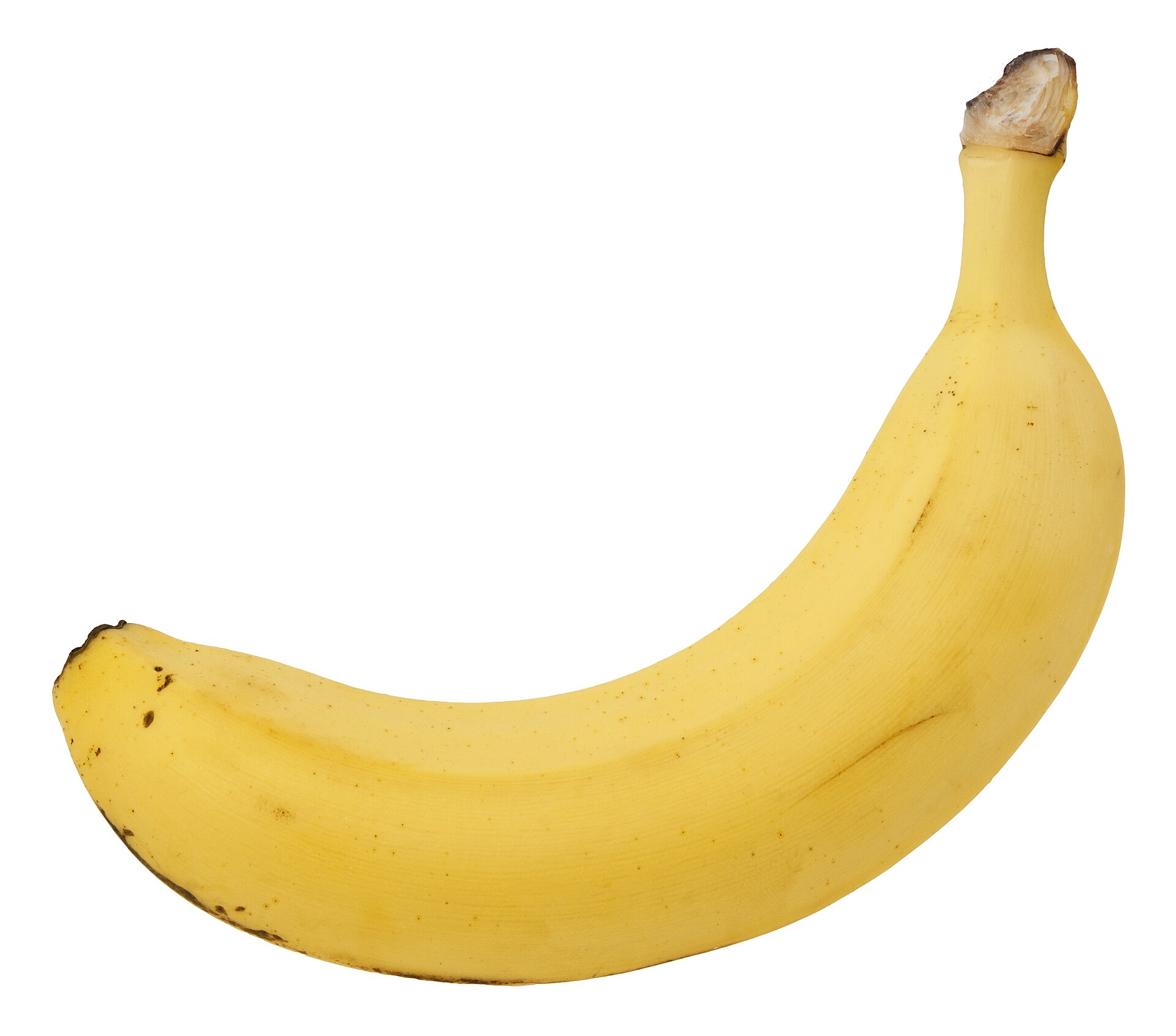
Florida is considered a climatically marginal area for commercial banana production due to our subtropical climate and occasional freezes.
Jump: freeze · cover · pups · clones · fruit
A herb, not a tree
The trunk is a pseudostem made of packed leaf sheaths. The real stem is an underground rhizome, the corm, and it carries 200 to 500 fibrous roots that can run 5 feet deep and 16 feet sideways in good soil. The flowering stalk pushes up through the center of the pseudostem 10 to 15 months after planting, by which time the plant has made 26 to 32 leaves. The banana growing guide calls that event shooting. From shooting to harvest is another 80 to 180 days depending on temperature, cultivar, soil moisture, and care.
Freeze cuts it down
Shoot growth is best between 78°F and 82°F, fruit growth between 84°F and 86°F. Growth slows below 60°F and stops at 50°F. Between 60°F and freezing you get chilling injury, and its signature is choking: the flowering stalk or fruit bunch fails to emerge from the pseudostem at all. Chilled fruit also ripens to a dull yellow or greenish gray, comes out distorted, and rots more. At or below 32°F everything above ground goes water-soaked, then brown and dead. Below 28°F the plant may be killed to the ground, and new growth usually sprouts from the rhizome when warm weather returns. Heat has a ceiling too. At or above 98°F leaves scorch and new leaves come out with very narrow blades.
| Temperature | What the paper says |
|---|---|
| 78–86°F | Best shoot and fruit growth |
| Below 60°F | Growth slows. Chilling injury, including choking |
| 32°F and below | Freeze damage to leaves, pseudostems, fruit |
| Below 28°F | May kill to the ground. The corm can return |
| 98°F and above | Leaf scorch. Narrow new leaves |
A row cover is the tool that fits that table on a cold night. Get this. It buys a margin on a light freeze. It does not make Central Florida south Florida.
Dwarf Cavendish, and what to avoid
The Cavendish group is the grocery banana, and within it the clones differ mainly by how tall the pseudostem gets. Dwarf Cavendish is the shortest, and the banana growing guide says it is widely planted, better adapted to the cool subtropics than most other commercial cultivars, and recommended for south Florida where in frost-free years with good care it produces abundant fruit. Its disadvantage is susceptibility to Black Sigatoka. Williams is also reported tolerant of cool subtropical areas. Gros Michel is the one to skip: poor cold tolerance, susceptible to both Panama disease and Sigatoka, and the banana growing guide says not to plant it in a home landscape.
Two diseases set the ceiling. Sigatoka is a pair of related fungi, Yellow and Black, that attack and kill leaves, which can weaken the plant enough to cut or eliminate fruit. The banana growing guide says Black Sigatoka is more of a problem in large commercial plantings than in an isolated clump in a yard, and that both are worse in continuously rainy weather. Panama disease is Fusarium oxysporum f. Sp. Cubense. It attacks the roots and colonizes the conducting tissue of the pseudostem until the plant collapses. Races 1 and 2 are present in Florida. Infested soil limits what you can grow there, permanently. The FHIA varieties were bred against this: FHIA-01, sold as Goldfinger, is resistant to Panama disease and to both Sigatokas.
How to plant
- Start from large sword suckers or maidenheads. A sword sucker is the one attached firmly to the mother rhizome with narrow, sword-like leaves. Water suckers sit next to the mat but are only superficially attached, have broad leaves, and the banana growing guide says they produce inferior fruit.
- Cut sword suckers off vigorous clumps with a spade when they are 4 to 5 feet tall. Check the roots. Nodulations and internal lesions mean nematode or borer damage. Tissue-cultured plants are the clean option if you can find them.
- The banana growing guide gives March, April, and May as the best planting months for south Florida with irrigation, otherwise wait for the June rains. Central Florida is colder, so plan on a freeze rather than hoping past one.
- Dig a wide hole, 3 feet across by 2 feet deep if you can. Mix composted organic matter or a sand and peat mixture into the native soil at no more than half and half. Water it in thoroughly and mulch heavily.
- Full sun, or close to it. The banana growing guide allows light shade but shade delays fruit. Keep the mat to three or four stalks of mixed ages. Take the rest.
Spacing depends on the variety. Dwarf plants can sit as close as 8 feet from each other; large varieties want 12 feet or more to leave room for the mat to expand. Bananas can go 10 feet or more from an outdoor wall as a sunscreen, but the banana growing guide warns against planting near windows because of toppling in strong wind.
Ground or pot
The banana growing guide is written for plants in the ground, and the numbers say why: a 3 by 2 foot hole, roots that run 16 feet laterally, and a plant that can carry a 25 to 40 pound bunch. It also gives an out for wet ground, which is common here. Where the water table sits within about 7 feet of the surface or the yard floods after heavy rain, plant on a mound of native soil 2 to 3 feet high and 4 to 10 feet across. If your only option is a container, understand what you are trading: a pot you can move indoors, against a plant that will not reach the size the yield figures assume.
When to pick
Cut the bunch when the fingers are plump but before they start to turn yellow. The tell is shape rather than color: the edges of each fruit have smoothed out and the sides have swelled. The banana growing guide suggests harvesting 7 to 14 days before the fruit would ripen on the plant, and says hanging the bunch in a shady, cool place seems to give better flavor than letting it ripen outside. A hook keeps the bunch off the counter while it finishes. Get this. Do not refrigerate bananas before they ripen. Chilling injury means they may never ripen properly, and you get discolored peel, discolored pulp, and poor flavor. Bunches run 25 to 40 pounds per pseudostem, and a well-cared-for plant can push 100. Not every banana on a stalk ripens at once, which is the only reason a bunch that size is manageable.
Cold-hardy versus marginal
UF/IFAS banana guidance rates clones G (good cold tolerance), F (fair), or P (poor). Those ratings are for south Florida availability, not a Central Florida guarantee. Dwarf Cavendish is fair and the home-landscape default: widely planted, better adapted to the cool subtropics than most commercial clones, recommended for south Florida in frost-free years. Williams is fair-to-good. Mysore and Lady Finger (Pome/Brazilian/Prata) are rated good, but Lady Finger is tall, wind-prone, and susceptible to Panama disease. FHIA-01 (Goldfinger) is good and resistant to Panama and both Sigatokas. Gros Michel is poor: skip it. Hua moa is poor-cold and Panama-susceptible: skip it here.
Gardening Solutions adds Japanese fiber banana (Musa basjoo) as the most cold-hardy option, able to survive sub-zero temperatures; it is ornamental, not grocery fruit. Black Thai (Musa balbisiana) is another cold-hardy ornamental. Hypothesis: treat Basjoo as a landscape plant in Orange County, not as a dessert bunch. The 2023 USDA Plant Hardiness Zone Map is the ZIP lookup. Zone 10a averages 30–35°F extreme minimum; 9b averages 25–30°F. Those numbers sit on top of the IFAS freeze table. Look up your ZIP. A zone 10a average still includes nights that cross 32°F.
| Clone | IFAS cold rating | Panama (races 1–2) | Yard note |
|---|---|---|---|
| Dwarf Cavendish | Fair | Resistant | Shortest grocery clone. Easier to wrap. Black Sigatoka is the listed disadvantage. |
| Williams / Giant Cavendish | Fair–good | Resistant | Cool-subtropic tolerance reported. Taller than Dwarf Cavendish. |
| FHIA-01 Goldfinger | Good | Resistant | Dessert. Panama and Yellow and Black Sigatoka resistance. Highly recommended for the home landscape. |
| FHIA-02 Mona Lisa, FHIA-03, FHIA-17, FHIA-21 | Good | Resistant | FHIA set. FHIA-03 is mainly a cooking banana. |
| Mysore | Good | Resistant | Home landscape. Taller than Dwarf Cavendish. |
| Lady Finger / Pome / Brazilian | Good | Susceptible | Tall. Small sweet fruit. Wind and Panama limit it. |
| Orinoco / Bluggoe / Horse banana | Fair–good | Susceptible | Cooking banana. Indian River: slightly more cold-tolerant. Eat green as a plantain. |
| Ice Cream / Blue Java | Fair–good | Susceptible | Cooking group in the banana guide table. Indian River: to about 12 ft, suckers well. |
| Gros Michel | Poor | Susceptible | Skip. |
| Musa basjoo | Gardening Solutions: most cold-hardy | — | Ornamental. Sub-zero survival. Not grocery fruit. |
Compare has the same clones in a pick-this-not-that layout. Two diseases still set the ceiling. Sigatoka is worse in continuously rainy weather and in large plantings than in an isolated yard clump. Panama disease is Fusarium oxysporum f. sp. cubense in the soil, permanent for what you can grow there. Races 1 and 2 are present in Florida. Tropical race 4 is not in Florida at the time of the paper. Plantains are listed as resistant to that fungus.
Freeze wrap
UF/IFAS banana guidance gives the damage table. It does not give a wrap recipe. UF/IFAS Extension Indian River County does: leave dried banana leaves on the pseudostem from October through March; if a severe freeze is coming, build a wire-mesh cylinder and pile oak leaves or mulch as high as you can around the trunks; after the event, take the cage down and spread the leaves as mulch so they are ready for the next night. The same note lists a barrel of water under the circle, enclosed with the trunks under a sheet, as another thermal-mass trick. Keep old leaves on for cover. Do not strip the plant for looks in November.
- Water the ground the day before a freeze. Hypothesis: moist soil holds and reradiates more heat than dry sand. UF/IFAS banana guidance does not measure that gain. It only says bananas need 4 to 6 inches of water a month and hate flood.
- Mulch 2 to 6 inches from the pseudostems outward. UF/IFAS banana guidance wants that layer for moisture and weeds. On a freeze night it is also the blanket over the corm.
- Wrap or cage the stems you mean to keep. A row cover is the retail version of the Indian River sheet. Cover to the ground. Get this.
- Uncover when the sun returns so the plant does not cook. Leave the mulch. Indian River: if the pseudostem stays upright, new leaves can push from the top once it warms. If the freeze was too hard, the trunk topples and the corm starts over.
Hypothesis: wrap the pseudostem from the soil up in frost cloth or burlap, then throw a cover over a dwarf plant on a still night. That can save the next leaf flush if the low stays near 32°F. A hard freeze below 28°F still cuts the plant to the ground. Plastic against foliage is a landscape freeze-protection mistake. Cloth buys a margin on a light freeze. It does not rewrite 32°F or 28°F, and it does not promise the bunch.
Musa spp.: Banana (ENH-568/ST409) lists USDA hardiness zones 9B through 11 for the plant as a landscape subject. Fruit is a separate question. ST409 says plants killed to the ground that sprout in spring will not produce fruit until the following year. Gardening Solutions: plants may lose their leaves in cold winters and usually put out new growth in spring. That is recovery, not a harvest that year.
Pups: sword, water, peeper
A banana pseudostem fruits once. After you cut the bunch, cut that stalk at the base, chop it, and leave it as mulch on the mat. The next crop is a follow-up sucker, a pup, already growing from the same corm. Allowing every shoot to stand makes small bunches, slow flowering, and more disease. The banana guide cultural calendar: keep 3 to 4 pseudostems of different ages. One flowering or fruiting. One at about half to two-thirds that size. One or two sword suckers, 6 inches to 3 feet tall. Gardening Solutions says the same three-or-four-stalk limit. Indian River County says if you keep more than four pups they rob nutrients and will not fruit.
| Shoot | What it looks like | What to do |
|---|---|---|
| Sword sucker | Narrow, sword-like leaves, 12–48 inches, attached firmly to the mother rhizome | Keep as the replacement. Best planting material at 4–5 ft |
| Maidenhead | A large non-fruiting pseudostem with roots and some rhizome | Preferred planting material, with large sword suckers |
| Water sucker | Broad leaves, only superficially attached to the mother rhizome | Skip. Inferior fruit. UF/IFAS banana guidance does not recommend it |
| Peeper | 1–12 inches tall. Will become a sword or a water sucker | Keep only if you need a replacement. Gouge the rest |
Cut sword suckers from vigorous clumps at 4 to 5 feet for planting. Check roots: nodulations and internal lesions mean nematode or borer damage. Tissue-cultured plants are the clean option if you can find them. After a freeze, wait for the corm. New peepers are the restart, not a dug-up rhizome. Unwanted suckers get cut at ground level and the underground bud gouged out with a digging bar or rebar, or they return in days. After harvest, removing the male bud below the last hand speeds fruit development if you do it as soon as the female flowers have set.
When fruiting happens here
Tropics fruit year-round. Florida does not. Planting to harvest is 9 to 20 months from a small sucker. The flower stalk (shooting) pushes up 10 to 15 months after planting, after 26 to 32 leaves. Harvest is another 80 to 180 days. A well-kept mat can then fruit from a new sucker on a yearly rhythm if the winter leaves a living stem. ST409: in USDA zones 8b and 9, fruit happens only when winter stays above freezing; a plant killed to the ground that sprouts in spring waits until the next year. Orlando's 2023 USDA zone is warmer than 8b on average. The banana guide freeze lines still apply on the night that drops to 32°F or 28°F.
IFAS gives March–May as the best planting months for south Florida with irrigation, otherwise June rains. Hypothesis for Orange County: plant after the freeze season so the sucker has a full warm stretch before January. The paper does not give a Central Florida month. A January kill-to-the-ground event zeros the calendar. Chilling between 60°F and freezing can choke the bunch so it never emerges. Grocery Cavendish is imported. The banana guide commercial story for Florida is small-scale south Florida, local markets, occasional freezes. A January banana in a store is not an Orange County harvest.
Questions
Will it fruit after a freeze?
Tops can die below 28°F. The corm usually resprouts when warmth returns. ST409: a plant killed to the ground that sprouts in spring will not fruit until the following year. Time from planting a small sucker to harvest is 9 to 20 months even without a setback.
How many pups should a mat keep?
Three to four stalks of mixed ages: one flowering or fruiting, one half to two-thirds grown, one or two sword suckers. UF/IFAS banana guidance and Gardening Solutions agree. Gouge the rest. Sword suckers have narrow leaves and a firm attachment. Water suckers have broad leaves and a weak attachment. Skip water suckers.
Which clone for Orlando?
Dwarf Cavendish is the short, widely planted fair-cold dessert clone. Goldfinger (FHIA-01) is good-cold and disease-resistant. Skip Gros Michel. Basjoo is the cold-hardy landscape banana, not a grocery fruit. Compare has the pick table.
Are grocery bananas Florida fruit?
Almost never. Imports fill grocery bins. The banana growing guide calls the state climatically marginal for commercial production.
Should I dig up the corm after a freeze?
No. New growth usually comes from the rhizome once it warms up. Wait for it.
Sources
- Banana Growing in the Florida Home Landscape (HS10/MG040), UF/IFAS
- Bananas, UF/IFAS Gardening Solutions
- Musa spp.: Banana (ENH-568/ST409), UF/IFAS
- USDA Plant Hardiness Zone Map (2023)
- Banana Growing – Florida, UF/IFAS Extension Indian River County
Cover, thin, and wait on Guides · cold-hardy versus skip on Compare · Tropics year-round versus a freeze here · Shop for hangers and cloth.